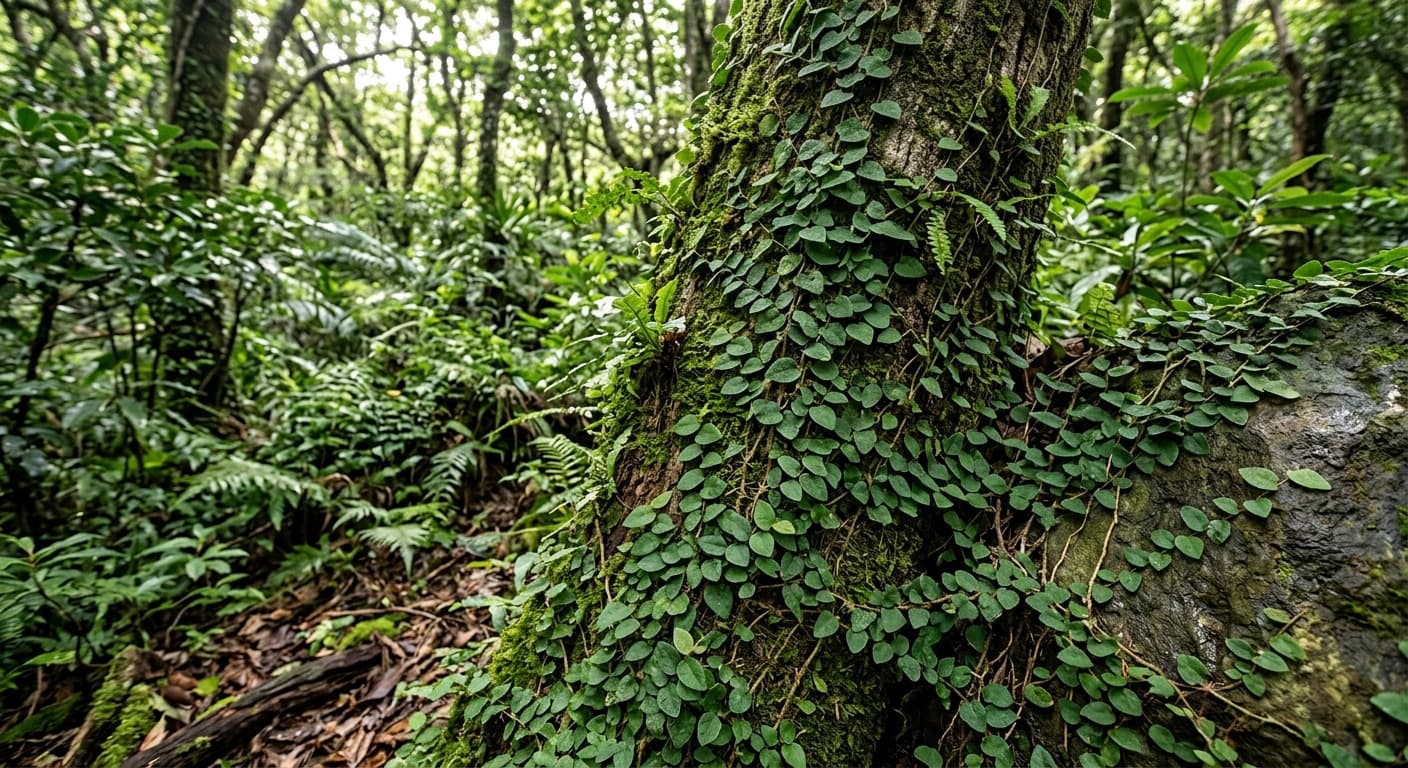
Generated by Gemini AI for Ficus pumila
Creeping Fig Plant Care
Ficus pumila L.
Ficus pumila, also known as Climbing fig or Creeping fig, is a trailing plant with small leaves ideal for hanging baskets or as a ground cover.
Every 7–10 days
Bright indirect
65–85°F
40–60%
What Is the Creeping Fig?
Creeping Fig (Ficus pumila) belongs to the Moraceae family within the Ficus genus. Creeping Fig is native to East Asia, China, Japan, Vietnam. Creeping Fig is also known as Creeping Fig, Climbing Fig, Creeping Rubber Plant.
Creeping Fig displays a trailing, spreading growth habit, reaching up to 1 inches tall with a spread of approximately 6 inches. Creeping Fig produces inconspicuous, small, and urn-shaped flowers.
Leaf size: approximately 1 inches.
How Often Should You Water a Creeping Fig?
Ficus pumila requires watering every 7–10 days. Allow the top layer of soil to dry between waterings to prevent root rot. Reduce watering frequency during winter when growth slows.
Watering Frequency
Every 7–10 days
Let soil partially dry between waterings
What Light Does the Creeping Fig Need?
Creeping Fig thrives in bright indirect light conditions. The optimal light range is 1000–2000 lux. Avoid placing Creeping Fig in direct, harsh sunlight for extended periods, as this can scorch the foliage.
Light Requirement
Bright indirect
1000–2000 lux
What Temperature and Humidity Does the Creeping Fig Prefer?
Ficus pumila grows best at temperatures between 65°F and 85°F. Creeping Fig prefers humidity levels of 40–60%.
Temperature
65–85°F
Humidity
40–60%
What Soil Mix Works Best for a Creeping Fig?
Well-draining soil mix. Good drainage is essential for Creeping Fig to prevent waterlogging, which leads to root rot and fungal issues.
How Do You Propagate a Creeping Fig?
Creeping Fig can be propagated through stem cuttings, layering. Similar propagation techniques also apply to chinese banyan plant care, which shares the same genus.
Fertilizing
Every 1 month
During the growing season
Is the Creeping Fig Toxic to Pets and Children?
Toxic to Pets & Children
Toxic to cats, dogs and humans
What Pests and Diseases Affect the Creeping Fig?
Creeping Fig is susceptible to mealybugs, spider mites. Inspect the foliage regularly, especially along leaf undersides and stems. Treat infestations promptly with insecticidal soap or neem oil to prevent spread.
What USDA Hardiness Zone Does the Creeping Fig Need?
Creeping Fig grows outdoors in USDA Zone 8b – 11b. Native to East Asia, China, Japan, Vietnam, Creeping Fig is adapted to warm climates. In cooler regions, grow Creeping Fig as a houseplant or bring it indoors before the first frost.
Hardiness Zone
Zone 8b – 11b
Related Plant Care Guides
Identify Plants Like the
Creeping Fig Instantly
Scan any plant with your iPhone camera and get instant ID, care tips, watering reminders, and disease checks — all in one app.

Free
to download
89%
accuracy
5.0
App Store
200K+
species