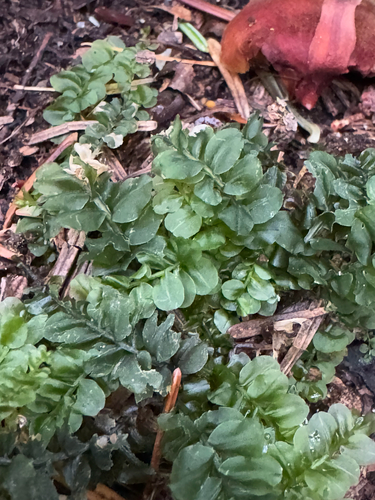
Photo: Jeff ClarkCC BY 4.0via iNaturalistresized / cropped
Carpet Moss Plant Care
Plagiomnium affine (Blandow ex Funck) T.J.Kop.
Updated · Sources · How we source care data
This delicate moss species is characterized by its feathery, fern-like leaves that form dense mats. Originating from Europe and North America, Plagiomnium affine is highly sought after by plant collectors for its unique texture and ability to thrive in both moist and dry conditions.
Every 3–7 days
Low to medium indirect light
50–75°F
50–70%
At a glance
How do you care for Carpet Moss?
Water Carpet Moss every 3–7 days, letting the top layer of soil dry out between waterings, and give it low to medium indirect light. It prefers temperatures of 50–75°F (10–24°C) and 50–70% humidity.

Where Is the Carpet Moss Native To?
- Albania
- Austria
- Belarus
- Belgium
- Bosnia and Herzegovina
- Bulgaria
- Canada
- Croatia
- Cyprus
- Czechia
- Denmark
- Estonia
- Finland
- France
- Germany
- Greece
- Hungary
- Iceland
- Ireland
- Italy
- Latvia
- Lithuania
- Luxembourg
- Malta
- Mexico
- Moldova
- Montenegro
- North Macedonia
- Norway
- Poland
- Portugal
- Romania
- Russia
- Serbia
- Slovakia
- Slovenia
- Spain
- Sweden
- Switzerland
- The Netherlands
- Ukraine
- United Kingdom
- United States
What Is the Carpet Moss?
Carpet Moss (Plagiomnium affine) belongs to the Mniaceae family within the Plagiomnium genus. Carpet Moss is native to old-growth boreal forests in North America, Europe and Asia, growing in moist. Carpet Moss is also known as Plagiomnium Moss, Dragon's Wing Moss.
Carpet Moss displays a low mat-forming growth habit, reaching up to tall with a spread of approximately 1 ft. Carpet Moss produces non-flowering plant.
How Often Should You Water a Carpet Moss?
Plagiomnium affine requires watering every 3–7 days. Allow the top layer of soil to dry between waterings to prevent root rot. Reduce watering frequency during winter when growth slows.
Watering Frequency
Every 3–7 days
Let soil partially dry between waterings
What Light Does the Carpet Moss Need?
Carpet Moss thrives in low to medium indirect light. Avoid placing Carpet Moss in direct, harsh sunlight for extended periods, as this can scorch the foliage.
Light Requirement
Low to medium indirect light
What Temperature and Humidity Does the Carpet Moss Prefer?
Plagiomnium affine grows best at temperatures of 50–75°F. Carpet Moss prefers humidity levels of 50–70%. A pebble tray or humidifier helps maintain adequate moisture around the plant.
Temperature
50–75°F
Humidity
50–70%
What Soil Mix Works Best for a Carpet Moss?
Moist, well-draining soil with high organic content. Good drainage is essential for Carpet Moss to prevent waterlogging, which leads to root rot and fungal issues.
How Do You Repot a Carpet Moss?
Rarely requires repotting, prefers stable environment. Choose a pot one size larger than the current container, and ensure it has drainage holes to allow excess water to escape.
How Do You Propagate a Carpet Moss?
Carpet Moss can be propagated through spores. Similar propagation techniques also apply to insigne feathermoss plant care, which shares the same genus.
Is the Carpet Moss Toxic to Pets and Children?
Pet safety not verified
We have no verified record for Carpet Moss, so we can't confirm whether it is safe for cats and dogs. Keep pets from chewing it as a precaution.
This is a general caution, not veterinary or medical advice. If your pet ate a plant, contact your vet or animal poison control.
See all plants toxic to cats and plants toxic to dogs.
What Pests and Diseases Affect the Carpet Moss?
Carpet Moss is susceptible to fungal diseases, moss mites. Inspect the foliage regularly, especially along leaf undersides and stems. Treat infestations promptly with insecticidal soap or neem oil to prevent spread.
Yellow leaves, brown tips or drooping? See common plant problems and how to fix them.
What USDA Hardiness Zone Does the Carpet Moss Need?
Carpet Moss grows outdoors in USDA Zone 3a – 8b. It survives winters down to planting zone 3a. Carpet Moss is native to old-growth boreal forests in North America, Europe and Asia, growing in moist.
Hardiness Zone
Zone 3a – 8b
Keep exploring plants
Carpet Moss is one of many species covered in the complete plant care and identification guide, which groups plants by genus, attribute, and popularity.
It belongs to the Plagiomnium genus — compare its care with other Plagiomnium species on PlantoScan.
Plagiomnium is part of the Mniaceae plant family — browse all Mniaceae genera and species.
Carpet Moss copes with lower light than most plants — browse the full list of low-light plants.
Related Plant Care Guides
Closely related plants with similar care requirements:
Sources
- Scientific name & taxonomy: Plagiomnium affine (Blandow ex Funck) T.J.Kop., family Mniaceae (first published in Ann. Bot. Fenn. 5: 146 1968) — World Flora Online record.
- Pet toxicity: Pet safety not verified: we have no verified record for Carpet Moss, so we can't confirm whether it is safe for cats and dogs. Any toxicity note on this page comes from PlantoScan's plant database.
- Photo: Jeff Clark, CC BY 4.0, iNaturalist — original.
- Hardiness zone: USDA Zone 3a – 8b, estimated from the plant's typical growing conditions.
- Care values (watering, light, temperature, humidity, soil, fertilizing): PlantoScan's plant database, filtered by automatic plausibility checks — values that fail them are hidden. How we source and check plant data.
Spotted a mistake? Email info@upvision.media with the page link — we check and correct reported errors.

Identify Plants Like the
Carpet Moss Instantly
Scan a plant with your phone camera and get instant ID, care tips, water and fertilizer reminders, and health checks — all in one app.


Free
to download
iOS & Android
platforms
Light & dark
mode
100,000+
species