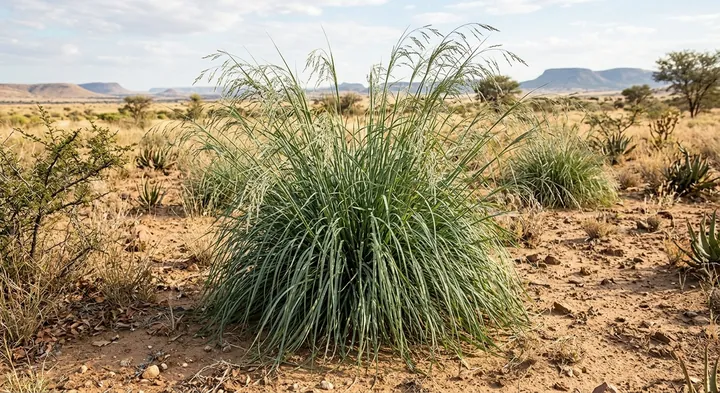
Image: AI generated
Curved Vetch Plant Care
Vignea curvula Opiz
Updated · Sources · How we source care data
With its unique curly leaves that cascade elegantly, this plant hails from the arid regions of Southern Africa. Plant collectors are drawn to Vignea curvula for its striking shape, making it a standout addition to any succulent garden or xeriscape landscape.
Every 7–14 days
Bright indirect light
65–85°F
40–60%
At a glance
How do you care for Curved Vetch?
Water Curved Vetch every 7–14 days, letting the top layer of soil dry out between waterings, and give it bright indirect light. It prefers temperatures of 65–85°F (18–29°C) and 40–60% humidity. Fertilize it every month during the growing season.

Where Is the Curved Vetch Native To?
- Albania
- Armenia
- Austria
- Azerbaijan
- Bahrain
- Belarus
- Belgium
- Bosnia and Herzegovina
- Bulgaria
- Croatia
- Cyprus
- Czechia
- Denmark
- Estonia
- Finland
- France
- Georgia
- Germany
- Greece
- Hungary
- Iceland
- Iran
- Iraq
- Ireland
- Israel
- Italy
- Jordan
- Kuwait
- Latvia
- Lebanon
- Lithuania
- Luxembourg
- Malta
- Moldova
- Mongolia
- Montenegro
- North Macedonia
- Norway
- Oman
- Palestine
- Poland
- Portugal
- Qatar
- Romania
- Russia
- Saudi Arabia
- Serbia
- Slovakia
- Slovenia
- Spain
- Sweden
- Switzerland
- Syria
- The Netherlands
- Türkiye
- UAE
- Ukraine
- United Kingdom
- Yemen
What Is the Curved Vetch?
Curved Vetch (Vignea curvula) belongs to the Cyperaceae family within the Vignea genus. Curved Vetch is native to Europe, western Asia, and Mongolia.
Curved Vetch displays a grass-like clumping growth habit, reaching up to 3 ft tall with a spread of approximately 2 ft. Curved Vetch produces small inconspicuous flowers.
Leaf size: approximately 6 inches.
How Often Should You Water a Curved Vetch?
Vignea curvula requires watering every 7–14 days. Allow the top layer of soil to dry between waterings to prevent root rot. Reduce watering frequency during winter when growth slows.
Watering Frequency
Every 7–14 days
Let soil partially dry between waterings
What Light Does the Curved Vetch Need?
Curved Vetch thrives in bright indirect light. Avoid placing Curved Vetch in direct, harsh sunlight for extended periods, as this can scorch the foliage.
Light Requirement
Bright indirect light
What Temperature and Humidity Does the Curved Vetch Prefer?
Vignea curvula grows best at temperatures of 65–85°F. Curved Vetch prefers humidity levels of 40–60%.
Temperature
65–85°F
Humidity
40–60%
What Soil Mix Works Best for a Curved Vetch?
Moist, fertile soil with good drainage. Good drainage is essential for Curved Vetch to prevent waterlogging, which leads to root rot and fungal issues.
How Often Should You Fertilize a Curved Vetch?
Feed Curved Vetch every month during the growing season (spring and summer) with a balanced fertilizer diluted to the strength on the label.
Pause feeding in autumn and winter, when growth slows, and never fertilize dry soil — water first.
Fertilizing
Every month
During the growing season
The PlantoScan app can remind you when to water and when to fertilize each plant.
How Do You Repot a Curved Vetch?
Repot every 1-2 years in spring. Choose a pot one size larger than the current container, and ensure it has drainage holes to allow excess water to escape.
How Do You Propagate a Curved Vetch?
Curved Vetch can be propagated through division, seeds.
Is the Curved Vetch Toxic to Pets and Children?
Pet safety not verified
The ASPCA does not list Curved Vetch, so we can't confirm whether it is safe for cats and dogs. Keep pets from chewing it as a precaution.
This is a general caution, not veterinary or medical advice. If your pet ate a plant, contact your vet or animal poison control.
See all plants toxic to cats and plants toxic to dogs.
What Pests and Diseases Affect the Curved Vetch?
Curved Vetch is susceptible to aphids, spider mites, scale insects. Inspect the foliage regularly, especially along leaf undersides and stems. Treat infestations promptly with insecticidal soap or neem oil to prevent spread.
Yellow leaves, brown tips or drooping? See common plant problems and how to fix them.
What USDA Hardiness Zone Does the Curved Vetch Need?
Curved Vetch grows outdoors in USDA Zone 3a – 7b. It survives winters down to planting zone 3a. Curved Vetch is native to Europe, western Asia, and Mongolia.
Hardiness Zone
Zone 3a – 7b
Keep exploring plants
Curved Vetch is one of many species covered in the complete plant care and identification guide, which groups plants by genus, attribute, and popularity.
It belongs to the Vignea genus (family Cyperaceae) — search all Vignea species in the plant lookup.
Curved Vetch thrives in bright light and direct sun — see other bright-light plants.
Related Plant Care Guides
Closely related plants with similar care requirements:
Sources
- Scientific name & taxonomy: Vignea curvula Opiz, family Cyperaceae (first published in Seznam : 103 (1852)) — World Flora Online record, IPNI name record.
- Pet toxicity: Pet safety not verified: the ASPCA does not list Curved Vetch, so we can't confirm whether it is safe for cats and dogs. Checked against the ASPCA plant list; any other toxicity note on this page comes from PlantoScan's plant database.
- Photo: AI-generated illustration (labelled on the image).
- Hardiness zone: USDA Zone 3a – 7b, estimated from the plant's typical growing conditions.
- Care values(watering, light, temperature, humidity, soil, fertilizing): PlantoScan's plant database, filtered by automatic plausibility checks — values that fail them are hidden. How we source and check plant data.
Spotted a mistake? Email info@upvision.media with the page link — we check and correct reported errors.

Identify Plants Like the
Curved Vetch Instantly
Scan any plant with your phone camera and get instant ID, care tips, water and fertilizer reminders, and health checks — all in one app.


Free
to download
iOS & Android
platforms
Light & dark
mode
100,000+
species